If you are shopping for a horse property near Versailles, it is easy to get distracted by a pretty barn, a nice house, or a postcard view. But in Woodford County, the real question is whether the property will actually work for your horses, your daily routine, and your long-term plans. This guide will help you look past the surface and focus on the details that matter most, from zoning and septic to pasture function and arena drainage. Let’s dive in.
Start With Zoning Fit
Near Versailles, a horse property purchase is not just about buying a home with acreage. Woodford County has more than 123,000 acres of agricultural land, and equine activity plays a major role in the local farm economy. That means land use rules matter early in your search, not after you fall in love with a property.
Woodford County’s A-1 Agricultural district is designed to preserve prime agricultural land and includes a right-to-farm policy. The county’s definition of agricultural use includes horses, which is helpful if you are looking at land for personal use or a more active equine setup. Even so, the exact use you have in mind should match the property’s zoning and permitted use.
For example, the county identifies a horse-related agricultural category for tracts of at least five contiguous acres used for riding lessons, training, boarding, related care, educational projects, and certain youth or amateur events. The ordinance also lists riding stables as a principal use in the Agricultural district. If you plan to host clinics or events, participation thresholds can matter, especially once attendance exceeds 70 people.
Questions To Ask About Zoning
- Is the property in the A-1 Agricultural district?
- Does your intended use involve private horses, boarding, lessons, training, or events?
- If events are part of the plan, how many participants are expected?
- Is the tract large enough for the intended horse-related use category?
Treat Septic As A Core Farm Issue
In Woodford County, septic is not a side note. The Woodford County Health Department says about two out of three homes in the county rely on individual onsite septic systems. On rural horse properties, that can affect where you place a barn, wash rack, driveway, paddocks, or future improvements.
For new systems, the health department’s site evaluation looks at property lines, wells, drainage ways, outbuildings, driveway location, house location, and topography. A soils analysis is also part of the process. If you are buying land with plans to build or expand, this step is a big deal because the usable layout of the property may be different from what you first imagine.
For existing systems, the health department can inspect the septic system when requested by a buyer, seller, or lender. If repairs are needed, the next step may move into a repair or alteration process. That is why septic should be part of your due diligence from the start, not something you circle back to later.
One more practical point matters here. If an area has been marked for an onsite sewage evaluation, grading or removing topsoil afterward can invalidate that evaluation. If you are planning sitework, timing matters.
Septic Due Diligence Checklist
- Confirm whether the home is on an onsite septic system.
- Ask whether the existing system has been inspected recently.
- Identify where the septic field is located in relation to barns and turnout areas.
- Review how future sitework could affect septic feasibility.
- Consider how wash areas, water runoff, and planned structures may compete for space.
Focus On Barn Flow First
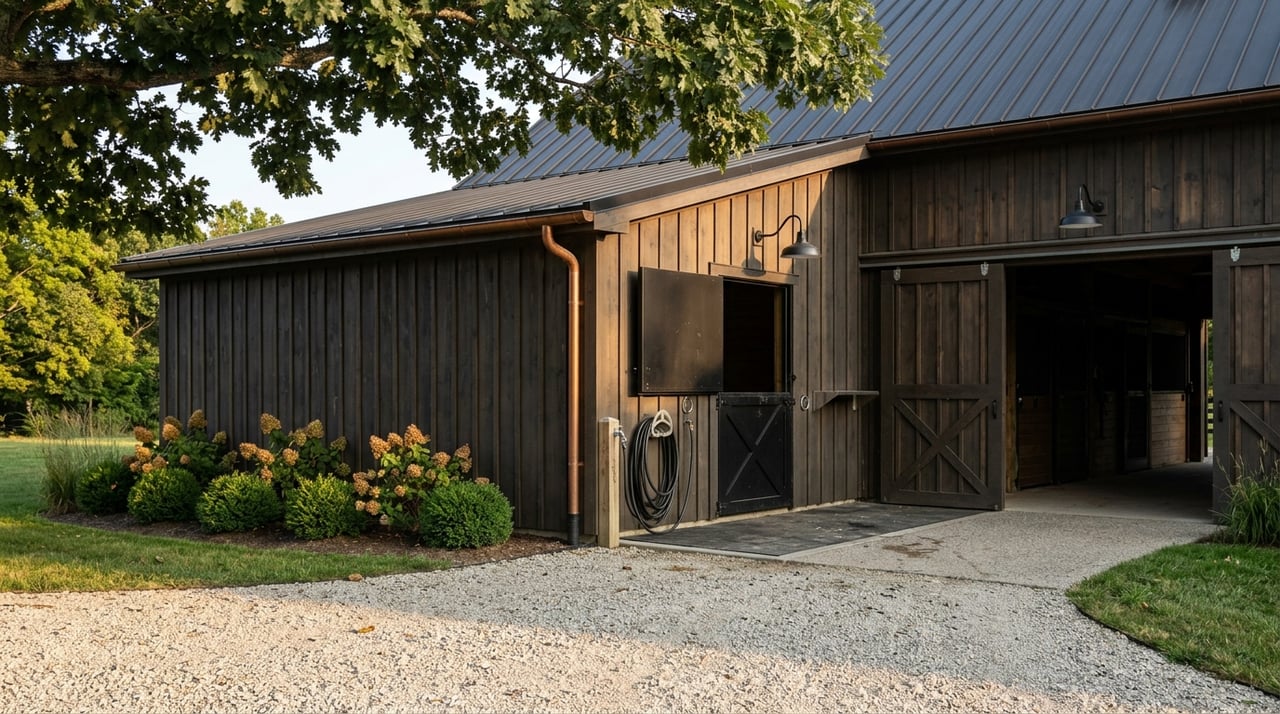
A beautiful barn can still be frustrating to use every day. The University of Kentucky equine layout checklist makes a simple but important point: horse facilities should be designed around the movement of horses, people, trailers, trucks, equipment, feed, bedding, manure, and water. In real life, barn flow usually matters more than fancy finishes.
When you tour a property, pay attention to how you would actually move through the site. Can a truck and trailer enter, turn, and leave safely? Can hay deliveries reach the barn without awkward backing? Are driveways and gates wide enough for equipment and routine farm traffic?
Inside the barn, basic dimensions matter too. The University of Kentucky identifies a 12-foot-by-12-foot stall as a useful benchmark for most needs, with a 12-foot aisle as a minimum starting point. Depending on how the barn is used, wider aisles may make more sense.
A good setup also accounts for daily support spaces. Tack storage, feed and bedding storage, wash rack space, restroom or office space, electricity, fresh water access, and manure handling are all part of a functioning horse property. These are not extras. They shape how smooth or stressful daily chores become.
Barn Questions Worth Asking
- Can horse trailers park and turn around easily?
- Can a hay truck or semi reach the barn area?
- Are gate openings sized for regular farm equipment?
- Is there enough storage for feed, bedding, and tack?
- Where does manure go?
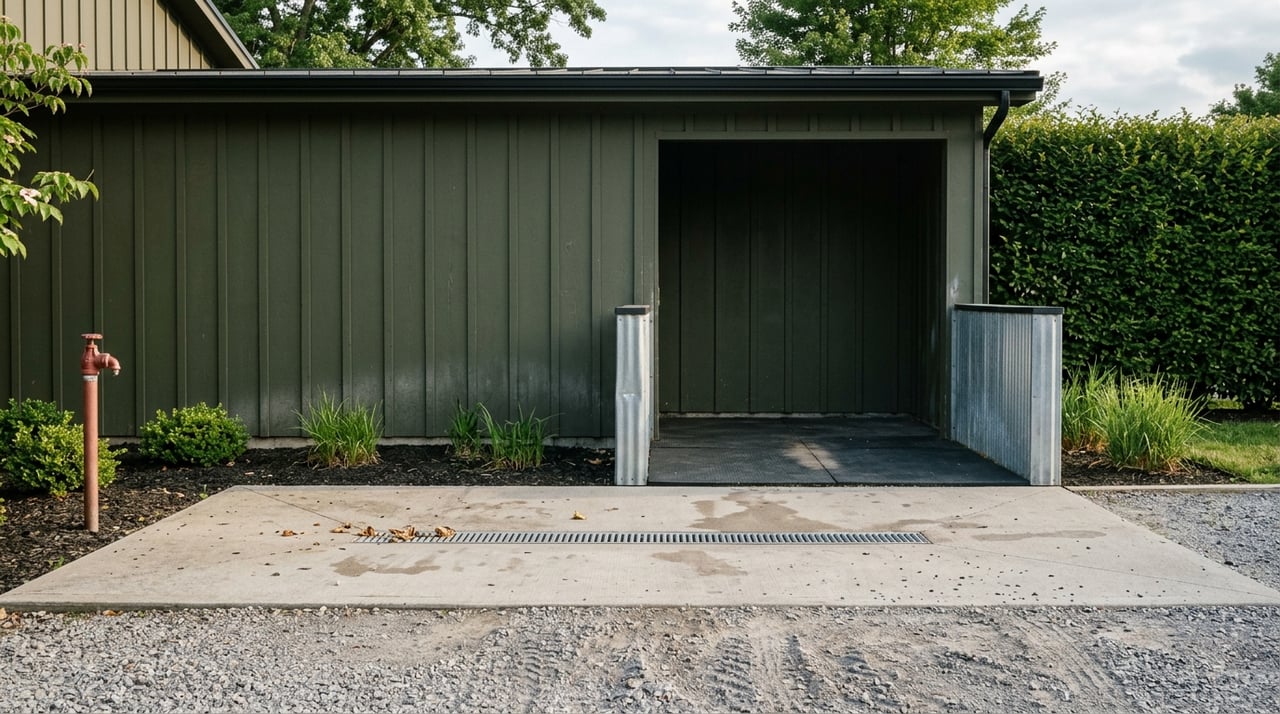
- How does water move off the barn and nearby traffic areas?
Pasture Is Part Of The Real Value
On a horse property, pasture quality is part of the purchase price even when it is not listed that way. A field can look green from the road and still have wet spots, poor soils, overgrazed areas, or layout issues that limit how useful it really is.
A smart first step is comparing soils. USDA NRCS says Web Soil Survey provides official soil information for a defined area, and SSURGO maps can show soil properties, flooding frequency, pasture yields, and building-site limitations. For horse-property buyers in Woodford County, this can help you compare parcels before you spend money on major changes.
Local support also matters. The Woodford County Extension Office handles soil sample submissions to the University of Kentucky lab, and the county agriculture and natural resources program helps with soil testing, disease diagnosis, plant, weed, and insect identification, plus whole-farm management and planning. Routine soil test results and fertilizer recommendations are typically emailed back to the county office in 10 to 14 working days.
The University of Kentucky recommends soil sampling every 2 to 3 years for horse pastures. If a farm has different paddocks, different soil types, wet areas, or different manure histories, those zones should be sampled separately rather than blended into one sample. A single sample should represent no more than 20 acres unless conditions are very uniform.
Know What Pasture Condition Tells You
Pasture condition gives you clues about future costs and daily management. In Central Kentucky, horse pastures commonly include Kentucky bluegrass, tall fescue, orchardgrass, and white clover. If the property includes broodmares or may in the future, tall fescue deserves a closer look because endophyte-infected tall fescue can be an issue in broodmare areas.
The University of Kentucky says one mature horse generally needs 2 to 3 acres of managed pasture. If the acreage is tighter than that, you should expect more dependence on stalls, sacrifice areas, or heavy-use pads. That does not automatically make a smaller property a bad fit, but it does change the management plan and operating costs.
Watch for signs of close, frequent grazing. Overgrazed fields can weaken sod, increase erosion, and invite weeds. Rotational grazing and sacrifice areas help protect pasture during wet weather and dormant periods, so an existing dry lot or sacrifice paddock is a useful feature.
Pasture Questions To Bring On Showings
- How many acres are actually usable for horses?
- Which paddocks stay wet first?
- Is there a dry lot or sacrifice area?
- Has the owner been soil testing regularly?
- Has liming or fertilizing been done on a schedule?
- Is tall fescue present in broodmare turnout areas?
Arena Quality Starts Below The Surface
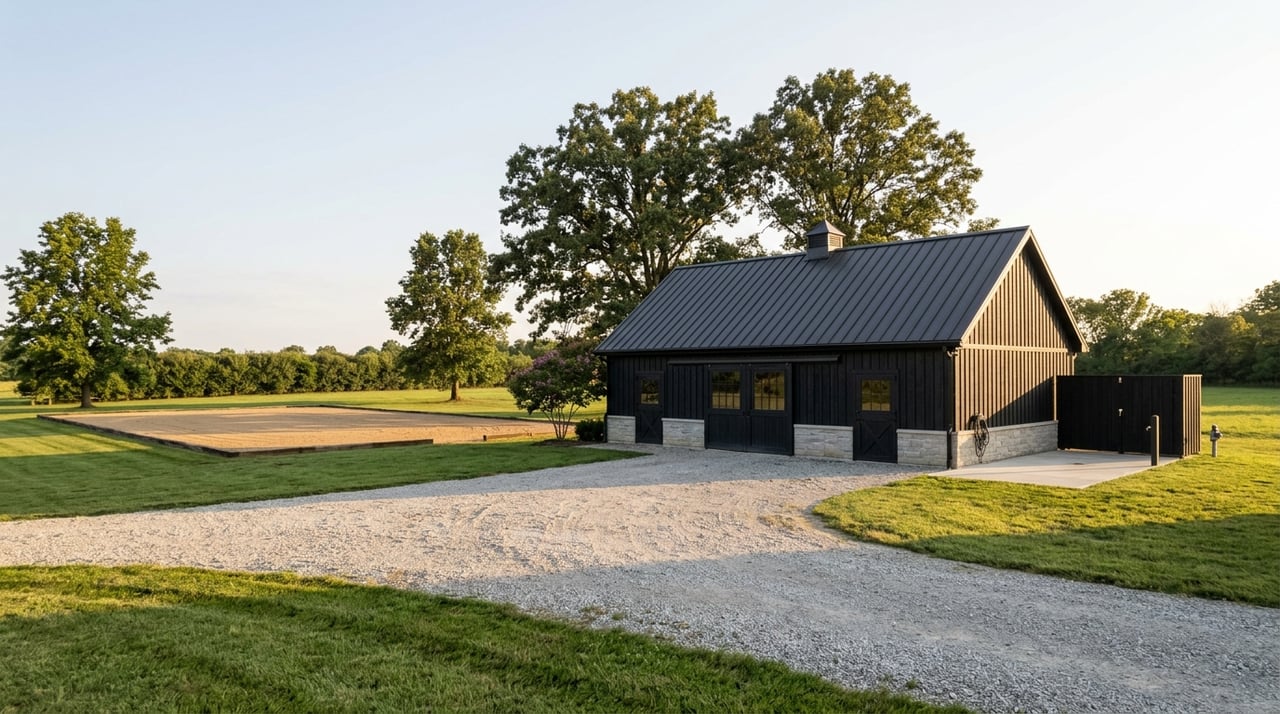
A nice-looking arena can be misleading if the drainage and base are poor. According to the University of Kentucky, arena surfaces are typically built in three layers: sub-base, base, and top footing. What sits under the surface is often more important than the top layer you see during a showing.
For outdoor arenas, drainage is a major issue. The University of Kentucky notes that a crown or another elevated, well-drained surface is commonly used, with a 1 to 2 percent crown slope helping move water away from the center. If water has nowhere to go, footing quality and usability can decline fast.
Footing material matters too. Coarse, well-sorted sand is often preferred because it helps drainage and can reduce dust. By contrast, high-clay soil footing may be slippery when wet and hard when dry, so it is smart to ask direct questions about the footing makeup and maintenance routine.
If you ride in multiple disciplines or plan heavier use, one arena may not do everything equally well. Different disciplines can need different footing characteristics, and larger operations may eventually want different arena setups for different jobs.
Plan Improvements In The Right Order
If you are buying a property that needs work, it helps to think in phases. In many cases, the smartest order is to fix water flow first, protect heavy-traffic areas, create usable pasture and turnout, and then invest in footing and amenity upgrades. Function first usually saves money and headaches.
That approach fits how horse properties actually operate. Access, drainage, fencing, and water management affect the property every day, in every season. Cosmetic upgrades can wait if the core layout and movement patterns are still being sorted out.
This is where a practical, operations-first lens can make a huge difference. A property does not have to be perfect on day one, but it does need a workable foundation for the way you plan to live and care for horses.
Compare Horse Properties With A Function-First Lens
When you compare horse properties near Versailles, try not to judge them only by the house, the barn style, or the first impression at the gate. A better framework is zoning fit, septic feasibility, barn circulation, usable pasture acreage, soil condition, and arena drainage. Those factors shape both your daily routine and your long-term costs.
If those pieces work, many other improvements are manageable over time. If they do not, even a beautiful property can become expensive, inefficient, and frustrating to operate. That is why a horse-property search needs both a real estate lens and an equine-operations lens.
If you want help evaluating a property near Versailles, from layout and pasture questions to phased improvement thinking, Sarah Macharg brings a practical Central Kentucky perspective and service that goes beyond the sale.
FAQs
What should you check first when buying a horse property near Versailles?
- Start with zoning, septic, and overall layout before focusing on cosmetic features like barn finishes or house updates.
How much pasture do you need for horses in Central Kentucky?
- The University of Kentucky says one mature horse generally needs 2 to 3 acres of managed pasture.
Why does septic matter on a horse property in Woodford County?
- Many rural homes in Woodford County rely on individual onsite septic systems, and the septic area can affect where you place barns, paddocks, driveways, and future improvements.
What makes a barn functional for daily horse use?
- Good barn flow supports safe movement for horses, people, trailers, hay deliveries, equipment, feed, bedding, manure, and water.
How can you evaluate pasture quality before buying a horse farm?
- Review usable acreage, wet areas, grazing condition, soil history, and whether the farm has been soil tested and managed on a regular schedule.
What should you ask about an arena on a Versailles horse property?
- Ask about the sub-base, base, top footing, drainage design, slope, footing material, and how the arena is maintained through wet and dry conditions.