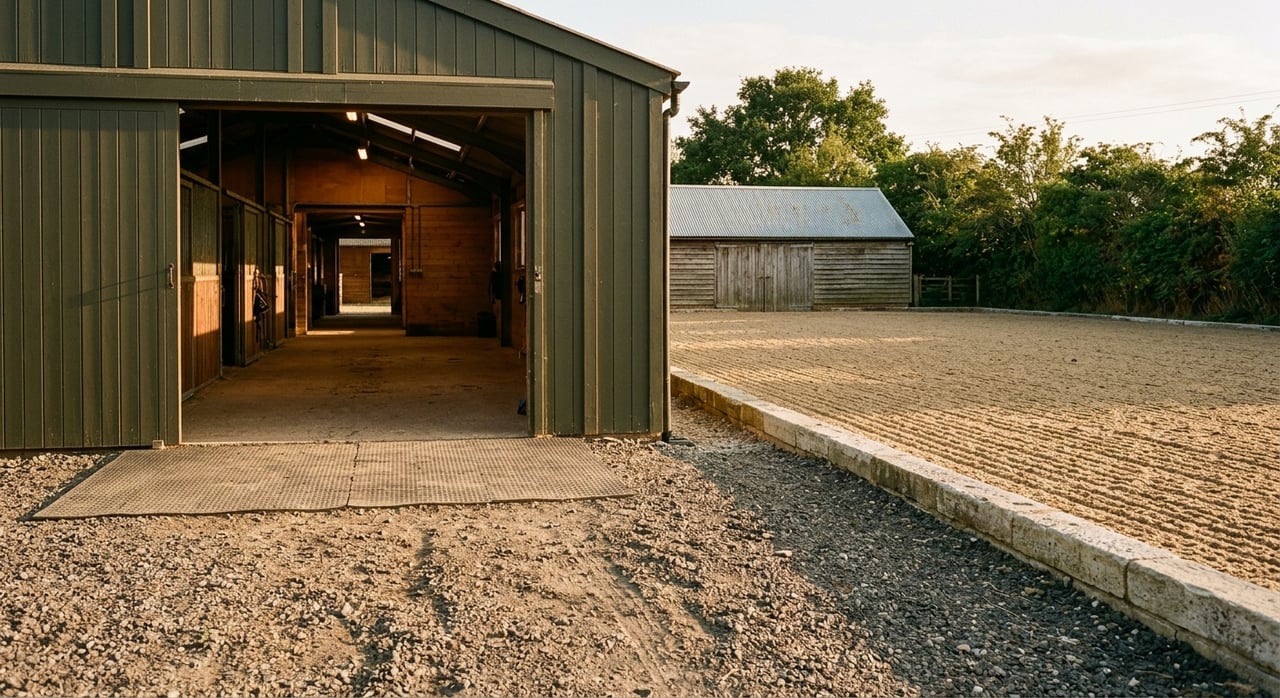
If you picture horse farm living in Versailles as a quiet postcard with white fences and green fields, you are not wrong, but that is only part of the story. Day to day, this lifestyle is practical, seasonal, and built around the needs of the land and the horses first. If you are thinking about buying in Woodford County, it helps to know what daily life really feels like before you make a move. Let’s dive in.
Horse country is part of daily life
Versailles is not a place where horse farms feel tucked away from everything else. In Woodford County, the horse economy is woven into the landscape and the local rhythm of life.
According to the 2022 Woodford County Equine Fact Sheet, the county had an estimated 11,000 horses across 650 equine operations and about 44,000 equine acres. That matters because it tells you this is not a niche lifestyle on the fringe. It is a working environment with both major farms and smaller private properties.
Versailles itself keeps a small-town feel while sitting in the middle of a very active horse region. The U.S. Census QuickFacts page for Versailles estimates the city population at 10,656 in July 2024, while Woodford County was estimated at 27,883 in July 2025. You get a rural setting with real services nearby, not total isolation.
What a typical day can look like
On a small horse property, your day usually starts with the basics before anything else. Feeding, turnout, checking water, walking fences, and looking over footing or muddy areas can shape your morning before your own workday gets going.
This is one reason Versailles appeals to buyers who want horse-country authenticity without feeling cut off. The area supports a lifestyle where horses are part of the daily schedule, but errands and appointments are still manageable.
That balance shows up in commuting patterns too. The U.S. Census QuickFacts data shows an average commute time of 24.5 minutes for Versailles and 24.0 minutes for Woodford County. In plain terms, many residents are balancing rural property life with regional travel for work, services, or appointments.
Mornings are often chore-first
If you are coming from a subdivision or city neighborhood, the biggest adjustment is usually this: the property starts asking for your attention early. Horses do not care if you planned to ease into the day with coffee and email.
On many properties, mornings may include:
- Feeding and checking each horse
- Refilling or checking water sources
- Turning horses out or bringing them in
- Looking over fencing and gates
- Scanning paddocks for slick spots, mud, or drainage issues
- Confirming any vet, farrier, or service appointments
That does not mean every day feels hard or chaotic. It means your routine is tied to living systems, not just a house and yard.
The land shapes how you live
One of the biggest realities of horse farm living in Versailles is that the land is beautiful, but it is not simple. Woodford County sits in Kentucky’s Inner Bluegrass region, known for rolling limestone uplands, fertile soils, springs, and karst features.
The Kentucky Geological Survey’s Woodford County topography overview notes that the county courthouse in Versailles sits at about 895 feet and that the Kentucky River forms the county’s western boundary. The broader Bluegrass geology overview describes a gently to moderately rolling limestone upland with karst features such as sinkholes, springs, caves, and sinking streams.
For you as a buyer, that usually translates into more hands-on thinking about the ground itself. Drainage, low spots, footing, runoff, and how fencing works across uneven terrain matter a lot more here than they would on a flat suburban lot.
Rolling ground is scenic and practical
The views are part of the appeal, no question. But rolling ground also affects how a farm functions every single day.
A property may look ideal at first glance and still need a closer look at how water moves after rain, where mud tends to collect, or how a pasture lays out for turnout. On a horse property, those details are not minor. They affect maintenance, safety, and how comfortably the farm works over time.
This is where having a practical evaluation mindset matters. A pretty farm and a functional farm are not always the same thing, and ideally you want both.
Weather changes the routine
Horse farm living in Versailles is seasonal in a very real way. You are not usually dealing with extreme cold or a desert-dry climate, but you are absolutely planning around mud, summer heat, and freeze-thaw cycles.
Using Lexington as a local climate proxy, the National Weather Service 1991 to 2020 climate normals show 25.1 days per year with highs of at least 90°F, 89.9 days with lows at or below freezing, and 134.2 days with measurable precipitation. Those numbers help explain why horse owners here tend to think in seasons instead of fixed routines.
Spring and fall often mean mud management
In wetter stretches, your daily checklist can expand fast. Gates, sacrifice areas, water access points, and high-traffic paths need extra attention when the ground gets soft.
That can affect turnout plans, pasture wear, and how often you monitor certain areas. It also means you want a property that handles water reasonably well rather than one that fights you every time it rains.
Summer brings heat planning
Hot days are part of life here, and horse care shifts with that reality. You may structure turnout, exercise, and general activity around the heat of the day.
This does not make summer a problem. It just means your routine may become more intentional about shade, water, and timing.
Winter is more about consistency than drama
Versailles winters are less about extreme weather and more about steady management. Water systems, frozen ground, and day-to-day horse comfort can all require planning during freezing periods.
If you are moving from out of state, this often feels manageable once you understand the rhythm. The key is expecting regular winter chores rather than assuming the cold will be an occasional inconvenience.
The support network is a major advantage
One of the best parts of horse farm living around Versailles is that you are not trying to do it alone in the middle of nowhere. The local and regional equine support network is one of the area’s biggest practical strengths.
For everyday supplies, Woodford Feed Company has served Central Kentucky farms since 1940. For veterinary and specialty care, Versailles is home to Bluegrass Equine Surgery, Kentucky Equine Veterinary Dental Specialists, and KESMARC Kentucky, with Hagyard Equine Medical Institute also available in nearby Lexington.
This cluster changes the feel of ownership in a big way. Routine feed runs can stay local, and specialized care does not automatically mean a major haul across the state.
You are buying into an ecosystem
That matters more than many out-of-state buyers expect. A horse property is not just land, fencing, a barn, and a house. It works best when it sits inside a strong network of feed, veterinary care, rehab resources, and regional horse infrastructure.
Versailles gives you that ecosystem. It helps daily life feel more connected and more workable, especially if you are used to having to drive long distances for every horse-related need.
Horse culture extends beyond your property
Living in Versailles also means the horse world is not limited to your own farm gate. The broader region gives you access to equine attractions, events, and educational experiences that reinforce the area’s identity.
The Kentucky Horse Park in Lexington is a year-round equine destination that welcomes more than one million visitors annually and offers shows, horseback rides, museums, camping, and events. Horse Country and Woodford County Tourism also promote horse farm tours and equine-centered experiences across the area.
That may not change your feeding schedule, but it does shape the lifestyle. You are living in a place where horses are part of the local culture, economy, and public identity, not just a private hobby.
Why Versailles appeals to out-of-state buyers
For many buyers, the draw is not just the scenery. It is the combination of authenticity, infrastructure, and manageable scale.
You can find a setting that feels rooted in real Kentucky horse country while still being connected to services and regional travel. That balance is hard to replicate, and it is a big reason Versailles stays on the radar for equine relocations and lifestyle buyers.
If you are evaluating horse properties here, the goal is not simply to find acreage. It is to find land and improvements that support how you want to live and how you need the property to function every day.
What to pay attention to when buying
Horse farm living looks great in photos, but buying wisely means looking beyond the charm. In Versailles, practical details usually tell you more than curb appeal ever will.
As you compare properties, pay close attention to:
- How the land drains and where water collects
- The layout of paddocks, gates, and turnout areas
- Fencing condition and how it fits rolling terrain
- Access to feed, veterinary, and equine support services
- How seasonal weather may affect daily routines
- Whether the farm setup matches your actual use, not just your wish list
This is where local guidance matters. If you are moving from out of state or buying your first equine property, it helps to work with someone who understands both the real estate side and the operational side.
Horse farm living in Versailles can be beautiful, grounded, and deeply rewarding, but it works best when you buy with clear eyes. If you want help evaluating land, layout, and the day-to-day function of a horse property in Central Kentucky, connect with Sarah Macharg for practical guidance that goes beyond the sale.
FAQs
What does daily horse farm living in Versailles KY usually involve?
- Daily life often includes feeding, turnout, water checks, fence checks, pasture observation, and scheduling around horse care before or after the rest of your day.
What makes Versailles KY attractive for horse property buyers?
- Versailles offers a strong equine community, a dense network of horse properties, nearby equine services, and a small-town setting in the middle of Central Kentucky horse country.
How does land in Woodford County affect horse farm ownership?
- The area’s rolling limestone terrain can influence drainage, footing, runoff, and pasture management, so the land’s function matters as much as its appearance.
What kind of weather should horse owners expect in Versailles KY?
- The area typically brings seasonal routines built around measurable precipitation, summer heat, freezing days, and freeze-thaw conditions rather than extreme cold or drought.
Are equine services close to Versailles horse farms?
- Yes. Versailles and nearby Lexington offer local feed access plus equine veterinary, dental, rehabilitation, and hospital services that support day-to-day horse ownership.
Is horse farm living in Versailles KY isolated?
- Not usually. Many residents balance rural property living with regional travel, and local commute data suggests the area is connected rather than fully remote.